
Diocesan News
The annual collection for the Lourdes Pilgrimage Fund will be taken up at all Masses this weekend 7th/8th February 2026.
The Cork and Ross Diocesan Pilgrimage to Lourdes will take place from Friday 18th September to Wednesday 23rd September this year. People are encouraged to join the pilgrimage as helpers (male and female), nurses and doctors to assist pilgrims in Lourdes. Further information is available by emailing: lourdes@corkandross.org or by ringing 085 252 5040.
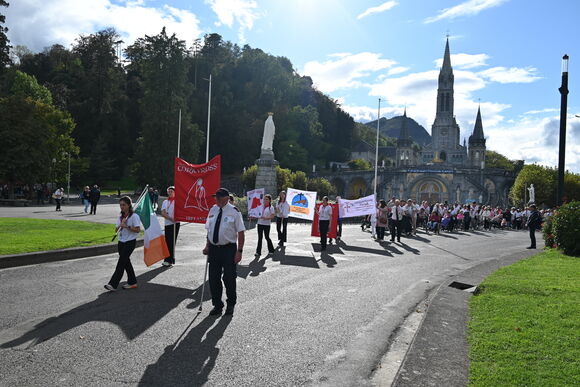 Video: Cork & Ross Lourdes Collection to be taken up at all Masses this weekend
There has always been great support for the Lourdes Pilgrimage Fund and your support and continued generosity for the collection on 7th/8th February is greatly appreciated.
 Watch our promotion video here
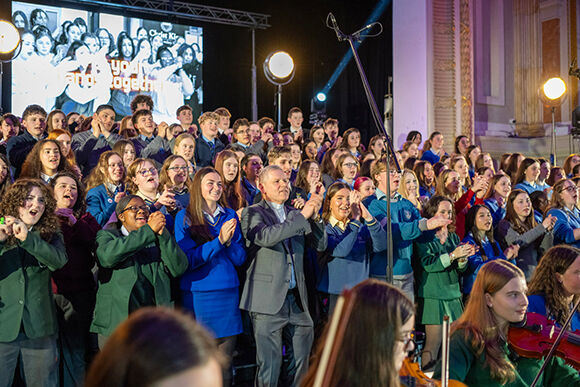
Please join us for Maranatha on Thursday 26th February in Cork City Hall.
Maranatha is a high-energy, faith-based concert that celebrates young people, joy, belonging, and faith.
Young people from parishes across the diocese attending post-primary schools have been preparing for Maranatha 2026.
The full day event cumulates in a concert in Cork City Hall on Thursday 26th February with over 500 young people singing together.
Maranatha was created to bring young people together to celebrate their faith through music and have fun at the same time.
Please support our young people by coming to this event. Tickets are €15 (plus booking fee) and are available to book here: Get your tickets here
Doors open 7pm, with concert beginning at 7.30pm.
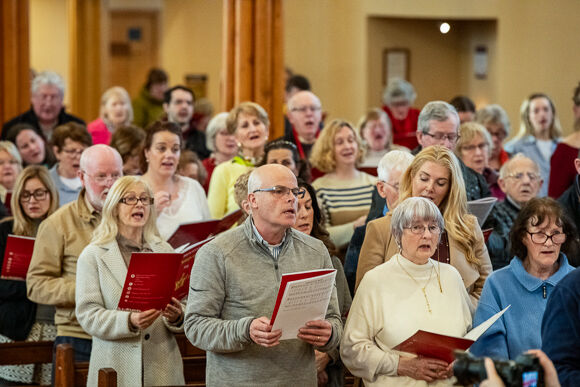 Over 300 parishioners attended Songs of Praise at the Cathedral of St. Mary and St. Anne, Cork Feb 1, 2026 Pic: Brian Lougheed.
More than 300 people from parishes of the Diocese of Cork and Ross gathered in the Cathedral of St. Mary and St Anne on St. Brigid’s Day afternoon for a Songs of Praise celebration organised by the Diocese of Cork and Ross
Choir directors, musicians, cantors, singers and members of the wider faith community came together for an afternoon of prayer and song. Hymns and music were led by John Casey and the Cathedral Choir, Honor O’Brien and Kinsale Choir, Ursula Mulvihill and Ballinora Choir, Mary O’Brien and St Columba’s Choir, Douglas.
The celebration combined shared learning, communal singing, prayer and reflection, highlighting the role of music in deepening faith and supporting worship.
Members of religious congregations in the Diocese of Cork and Ross gathered in St Francis’ Church, Cork, on Saturday, January 31st for the Diocesan Celebration of Consecrated Life, led by Bishop Fintan Gavin.
Celebrated on the threshold of Candlemas, the liturgy of Evening Prayer highlighted Christ as Light of the Nations and reflected on consecrated life as a vocation that receives, reflects and shares that light with a world often marked by weariness and division.
The Liturgy was prepared b y a representative group of religious including Sr. Sheila Kelleher, Sr. Monica Mohally, Br. Denis Aherne, Fr. Laurence Kettle, and Br. Simon Fernandes.
The Gospel of the Beatitudes was proclaimed by Fr. Patrick Younge OFM and it is a fitting portrait of religious life — rooted in Christ, shaped by mercy and humility, and quietly fruitful in service.
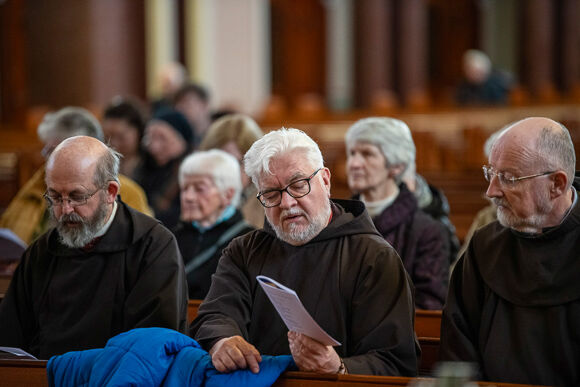 Celebrating Consecrated Life in the Diocese of Cork and Ross at St. Francis' Church,
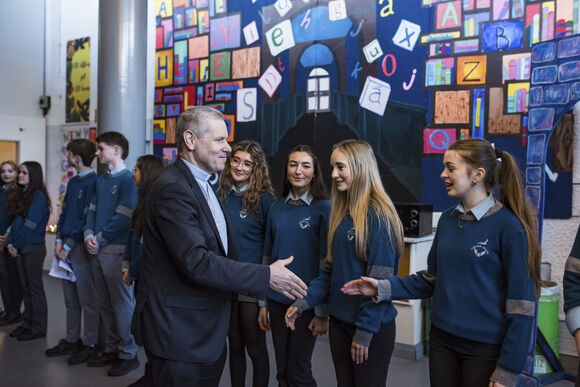 Bishop Fintan greeted by students at Colaiste Choilm Ballincollig
Bishop Fintan visited a number of post-primary schools across the diocese during Catholic Schools Week, taking time to meet with students, staff, and school communities.
As part of these pastoral visits, Bishop Fintan visited Ballincollig Community School, Nagle Community College (Mahon), and Coláiste Choilm (Ballincollig). At each school, he received a warm welcome and had the opportunity to engage with pupils, teachers, staff, and boards of management.
Catholic Schools Week 2026 is celebrated under the theme, “Catholic Schools: Normal Lives, Called to Holiness.” During his visits, Bishop Fintan reflected on how ultimate happiness is found in four pillars: faith, family, friendship, and fruitful service.
Search
The Parishioner

Latest Notices
-
January 2026
-
November 2025
-
November 2024
-
October 2024